Tuesday, December 29, 2009

James Beard Meatloaf; nothing better

I have used this recipe for more than 50 years. This is basic meatloaf. Note there is no tomato gunk over the top.

The changes I make are probably not significant.
1. Microwave the veggies first to soften
2. Panko breadcrumbs
3. Forget the bacon. Gave that up in the 1970's
4. I use 3 lbs meat. Just enough to fill Pan Loaf.
5. Over night chill.
in reference to: astray recipes: James beard's meatloaf (view on Google Sidewiki)

Tuesday, December 22, 2009

An Expert can Miss the Point

Accept Defeat: The Neuroscience of Screwing Up | Magazine: "Modern science is populated by expert insiders, schooled in narrow disciplines. Researchers have all studied the same thick textbooks, which make the world of fact seem settled. This led Kuhn, the philosopher of science, to argue that the only scientists capable of acknowledging the anomalies — and thus shifting paradigms and starting revolutions — are “either very young or very new to the field.” In other words, they are classic outsiders, naive and untenured. They aren’t inhibited from noticing the failures that point toward new possibilities."

Wednesday, December 9, 2009

Cocaine addiction may be solved in another decade; oops!

12 years after I had published with Richard Rothman, an employee of NIDA that cocaine addiction could be immediately stopped by the predecessor of PURSOR, Eric Nestler, using NIDA grant money stated:
"Effective medications for treating cocaine addiction will eventually be developed, and the best strategy for progress in this area is to target neurobiological mechanisms, such as those described above. Although the process takes a very long time—it can take 10 to 20 years to advance from identification of a disease mechanism to development of a new treatment—this work is in progress and represents the best hope for those who are addicted."

Wednesday, December 2, 2009

Decreased Frontal Lobe Activity in Addicted and Attention Deficit


 Nora Volkow, the current director of the National Institute on Drug Addiction (NIDA),  reviewed in 2005 the various protocols that are in use today to evaluate brain function in the addicted subject.
Modern imaging techniques enable researchers to observe drug actions and consequences as they occur and persist in the brains of abusing and addicted individuals.
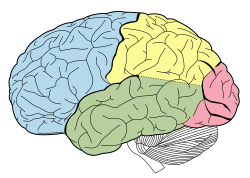
The frontal cortex (blue in the image) is a brain region that supports logical thinking, goal setting, planning, and self-control. Numerous studies have documented that addictive drugs cause volume and tissue composition changes in this region and that these changes are likely associated with abusers’ cognitive and decisionmaking problems.
Incidentally, similar changes occur in the brains of those suffering from ADD and ADHD.

The addicted individual must abstain from drugs for weeks to months before the frontal hypofunction resolves.  It would be of interest to see whether such resolution occurs shortly after the administration of the PURSOR protocol and the resultant resolution of craving.

Wednesday, November 25, 2009

Does neuroinflammation fan the flame in neurodegenerative diseases and autism?


The following quotation comes from a review article that is being published this month.

"While peripheral immune access to the central nervous system (CNS) is restricted and tightly controlled, the CNS is capable of dynamic immune and inflammatory responses to a variety of insults. Infections, trauma, stroke, toxins and other stimuli are capable of producing an immediate and short lived activation of the innate immune system within the CNS. This acute neuroinflammatory response includes activation of the resident immune cells (microglia) resulting in ... the release of inflammatory mediators such as cytokines and chemokines. Chronic neuroinflammation is a long-standing and often self-perpetuating  response that persists long after an initial injury or insult. ... The sustained release of inflammatory mediators works to perpetuate the inflammatory cycle, activating additional microglia, promoting their proliferation, and resulting in further release of inflammatory factors.

Neurodegenerative CNS disorders discussed are multiple sclerosis (MS), Alzheimer's disease (AD), Parkinson's disease (PD), Huntington's disease (HD), and amyotrophic lateral sclerosis (ALS)."(REF/ FULL TEXT)
Researchers are becoming aware that  autism is another neuroinflammatory condition that can be triggered in animal experiments. Terbutaline, a bronchodilator also used to arrest preterm labor, has been associated with the development of human autism. In animal experiments, terbutaline given early, also induce a condition that appears to be like autism. Neuroinflammation, mostly associated with innate immunity, characterized by activation of microglia and astroglia, as well as increased cytokines and chemokines, has recently been documented in post mortem studies of autism brains and in the animal damaged by neuroinflammation.(REF/FULL TEXT)

Another 2009 article that reinforces the suggestion that autism and neurodegenerative diseases are central nervous system autoimmune diseases skewed towards a proinflammatory bias :

This study determined immune activities in the brain of ASD patients and matched normal subjects by examining cytokines in the brain tissue. Our results showed that proinflammatory cytokines (TNF-alpha, IL-6 and GM-CSF), Th1 cytokine (IFN-gamma) and chemokine (IL-8) were significantly increased in the brains of ASD patients compared with the controls. However the Th2 cytokines (IL-4, IL-5 and IL-10) showed no significant difference. The Th1/Th2 ratio was also significantly increased in ASD patients. Conclusion: ASD patients displayed an increased innate and adaptive immune response through the Th1 pathway, suggesting that localized brain inflammation and autoimmune disorder may be involved in the pathogenesis of ASD.
Finally, Paul Ashwood writes this. I would highly recommend you read the full text of his article:
Autism spectrum disorders (ASD) are part of a broad spectrum of neurodevelopmental disorders known as pervasive developmental disorders, which occur in childhood. They are characterized by impairments in social interaction, verbal and nonverbal communication and the presence of restricted and repetitive stereotyped behaviors. At the present time, the etiology of ASD is largely unknown, but genetic, environmental, immunological, and neurological factors are thought to play a role in the development of ASD. Recently, increasing research has focused on the connections between the immune system and the nervous system, including its possible role in the development of ASD. These neuroimmune interactions begin early during embryogenesis and persist throughout an individual's lifetime, with successful neurodevelopment contingent upon a normal balanced immune response. Immune aberrations consistent with a dysregulated immune response, which so far, have been reported in autistic children, include abnormal or skewed T helper cell type 1 (T(H)1)/T(H)2 cytokine profiles, decreased lymphocyte numbers, decreased T cell mitogen response, and the imbalance of serum immunoglobulin levels. In addition, autism has been linked with autoimmunity and an association with immune-based genes including human leukocyte antigen (HLA)-DRB1 and complement C4 alleles described. There is potential that such aberrant immune activity during vulnerable and critical periods of neurodevelopment could participate in the generation of neurological dysfunction characteristic of ASD.
Damage or Disruption?

The PURSOR protocol has been extremely effective in ALS. It may be that irreversible changes occur in the child with autism. However, if the changes are not permanent, neuroinflammation and the autistic behavioral abnormalities may very well be remitted with PURSOR.

Monday, November 23, 2009

Results from PURSOR Survey


The PURSOR Follow up has been completed by 4 of the 12 persons sent the survey.

3/4 are still using PURSOR
The 1 person not taking PURSOR stated that the reason for stopping is the cost

4/4 are very satisfied with their response

3/4 said that their psychological improvement was similar to the response in the bar graph above. The other said it was "somewhat".


Thanks to those responding. I would appreciate hearing from anybody who has taken PURSOR for more than two weeks. . The survey is here. Anybody who wants can look at the survey, I just ask you not to participate. Please feel free to phone or email me if you have any questions.

The practitioners who have prescribed PURSOR have been notified of these results but no names have been disclosed to them or anybody else.

Pietr Hitzig, M.D.
Baltimore, MD
phitz96@gmail.com
Google Site: http://foxyurl.com/7Bh
Blog: http://foxyurl.com/KfE
PowerPoint: http://bit.ly/2UbPrN
443 231-6240

Sunday, November 22, 2009

Common Pathways of Abused Substances; All Lead to Dopamine

There is an excellent diagram in Nature Neuroscience that shows how the various drugs of abuse share a common pathway, usually starting in the ventral tegmental area and progressing to the dopamine neurons in the nucleus accumbens.

This highly technical article accentuates the point that all substances of abuse increase dopamine, remove pain and promote pleasure. The PURSOR protocol also increases dopamine but rather than increasing it very rapidly, does it relatively slowly, seconds vs. milliseconds. PURSOR relieves the psychic pains of low dopamine but provides no rush of pleasure. It therefore is not addictive.